About Me

My photo
I am mad(make a different).

Wednesday, February 23, 2011

World Cup: Pakistan crush Kenya by 205 runs

shahid afridi
(TOI)
HAMBANTOTA: Captain Shahid Afridi took five wickets and Umar Akmal scored one of four half-centuries as Pakistan crushed Kenya by 205 runs to get their World Cup campaign off to a flying start on Wednesday.
Hapless Kenya found their opponents too hot to handle after Umar hit a 52-ball 71 to anchor Pakistan's challenging total of 317/7 before they bundled out their rivals for just 112 in 33.1 overs.
Once Pakistan introduced spin, Kenyan wickets fell quickly with Afridi unplayable in the day-night match at Mahinda Rajapakse stadium.
Only Collins Obuya, with 47, and three other batsmen managed to reach double figures as Kenya -- bowled out for a paltry 69 in their first match against New Zealand on Sunday -- faltered again. Pakistan headed for a 300-plus total thanks to Umar Akmal (71), Misbah-ul-Haq (65), Kamran Akmal (55) and Younis Khan (50) as four batsmen scored half-centuries for the ninth time in a World Cup match.
Man of the match Umar, 21, playing his first World Cup tie, gave the innings a final flourish, sharing a rapid 118-run stand for the fifth wicket with in-form Haq who was equally aggressive during his 69-ball stay.
With Umar and Haq in full swing, Pakistan racked up 70 runs in the batting powerplay, with the junior Akmal hitting four boundaries off one Elijah Otieno over.
Haq, Pakistan's best batsman in the recent Test and one-day series in New Zealand, also added 45 for the fourth wicket with Khan before giving impetus to the innings with Umar to help Pakistan put up an impressive total.
Haq, whose first scoring shot was a six, hit one more six and a single boundary, while Umar notched eight boundaries and a six before holing out off Thomos Odoyo who finished with 3/41.
Odoyo conceded 20 wides in an embarrassing team total of 46 extras.Kenya equalled the highest number of wides bowled in a one-day innings of 37 conceded by the West Indies against Pakistan at Brisbane in 1989.
Pakistan had been sluggish at the start with openers Mohammad Hafeez (nine) and Ahmed Shahzad (one) falling in quick succession, leaving their team struggling at 12/2.
Hafeez was the first to go, failing to keep a drive down as a diving Seren Waters picked up a beautiful catch at short mid-wicket.
Two overs later, Shahzad, who scored his first run after 13 deliveries, was caught by skipper Jimmy Kamande off Odoyo.
Khan and Kamran revived the innings through a solid 98-run stand for the third wicket, pushing for singles off some tight bowling.
Pakistan next take on Sri Lanka, winners against Canada in their first match, on Saturday. Kenya meet Sri Lanka on March 1 with both matches in Colombo.

Tuesday, February 22, 2011

World Cup: England beat Netherlands by six wickets

England's batsman Andrew Strauss
(DNA)
NAGPUR.
The Netherlands all-rounder Ryan ten Doeschate's brilliant all-round effort went in vain as England huffed and puffed their way to a six-wicket win in a group B encounter of the World Cup here today.
Chasing a stiff target of 293, England batsman were made to work hard by a determined Dutchmen who were finally done in due to lack of big match temperament as Paul Collingwood and Ravi Bopara added a crucial 55 runs for the fifth wicket to win the match with eight balls to spare.
But no one can take the credit away from Ten Doeschate (119 and two for 47) who almost single-handedly threatened to take the game away from the Englishmen at the VCA ground in Jamtha here.
After their bowlers faltered, England openers started the chase in right earnest as Andrew Strauss (88, 83 balls, 9x4) played an out of character innings while Kevin Pietersen (39, 61 balls, 5x4) looked scratchy in between some good shots. It
was Strauss who made full use of the fielding restrictions as England scored 100 runs in 17 overs. The England captain scored his 27th ODI half century off ony 34 balls with the help of nine boundaries.
Pietersen was the first to depart when he drove uppishly off left-arm spinner Pieter Seelaar to skipper Peter Borren at short cover.
Strauss and Jonathan Trott (62, 65 balls, 4x4) then consolidated the innings for the second wicket adding 61 runs. Strauss who looked good for sixth ODI century then mistimed a pull shot off Mudassar Bukhari's bowling to Tom Cooper
stationed at square leg.
holland's all-rounder Ryan ten Doeschate
Trott and Ian Bell (33) didn't take too many risks in the middle overs as they were more intent on taking the singles and twos hitting the odd boundaries in between. They added 58 runs in 10.5 overs.
Ten Doeschate once again came to the rescue of his team as he struck at the start of the batting Powerplays with Wesley Barresi effecting a brilliant stumping to send back Trott.
If that wasn't enough, he cleaned up Bell in the 43rd over to get his second victim. But Bopara and Collingwood then ensured there was no further collapse and helped England script the third successful runchase in World Cup history.
Earlier, Ten Doeschate played the innings of his life as his superb century helped the Netherlands reach a challenging score of 292 for six in 50 overs.
The first cricketer from an Associate Nation to get an IPL contract (for KKR), Ten Doeschate during his innings of 119 (110 balls, 9x4, 3x6) showed why he is a quite a few notches above his colleagues in the Dutch team.
The ICC Associate Cricketer of Year was never in awe of opposition bowlers. He showed special fascination for the region between mid-wicket and deep mid-wicket as most of his scoring shots were hit in that particular arc. The three sixes (one each of Paul Collingwood, Kevin Pietersen and Graeme Swann) were a delight.
Save a mistimed lofted shot on 47, the others were pure cricketing shots. When Pietersen provided a juicy full toss, Ten Doeschate stepped out to hit him over deep mid wicket for a six.
His best shot was a six over deep mid-wicket off Swann. He just stepped out and lifted the ball with minimum backlift. His third six off Collingwood was hit in the same region with minimum footwork.
His third wicket partnership of 78 with Tom Cooper (47, 73 balls, 3x4) and 64 for the fifth wicket with Tom de Grooth (28) off 60 balls helped him take his team to a commanding position.
However, the last surge was provided during the batting Powerplays when Ten Doeschate in company of skipper Peter Borren (35 not out, 24 balls, 4x4) added 61 runs in only 5.2 overs.
The best ever cricketer to have played for the country, Ten Doeschate, who had earlier hit two half centuries in the previous edition (vs SA and Scotland) reached his fourth ODI century and first against a Test playing nation due to five overthrows off 98 deliveries.
When he was finally caught at mid-wicket boundary off Stuart Broad's bowling, his team had already reached a score of 274.
The sloppy fielding of the English fielders also helped the Dutch as they failed to stop the rival batsmen from running twos, misjudged catches and gave away atleast 15 extra runs.
Save Swann (two for 35), the other frontline bowlers also failed to impress. Even pacers James Anderson and Stuart Broad went for 73 and 65 runs from their 10 overs respectively.

NASA begins countdown for Discovery's final ride

(TOI)
CAPE CANAVERAL (FLORIDA) :
After a four-month grounding of the space shuttle fleet, NASA's countdown clocks started ticking again for Discovery's final ride into orbit.
Discovery is scheduled to blast off Thursday afternoon to the International Space Station. Forecasters put the odds of good weather at 80 per cent.
When NASA tried to launch Discovery in early November with supplies and a humanoid robot for the space station, the countdown never got past the fuelling phase. A hydrogen gas leak halted everything, then a more insidious problem cropped up: cracks in the external fuel tank.
The shuttle team went into overdrive to fix all the cracks in the metal struts, located on the central portion of the tank, and to reinforce the rest of the area. The problem increased the risk of broken insulating foam, the very issue that doomed Columbia in 2003.
"Discovery has been a really remarkable vehicle for us," NASA test director Jeff Spaulding told reporters yesterday.
"She still has a few more miles to go before she sleeps, though. She's taken us on many amazing journeys throughout the years, and we expect this flight to be no different than any of those."
Commander Steven Lindsey and his crew expressed gratitude for the unprecedented repairs. After arriving at Kennedy Space Centre over the weekend, Lindsey called the cracking problem "probably one of the most difficult, technical challenges we've faced in recent years."
The other challenge for the six-person crew, he noted, was the loss of the mission's lead spacewalker. Astronaut Timothy Kopra was replaced last month after he was hurt in a bicycle crash. Stephen Bowen, an experienced spacewalker, took over. "I've got big shoes to fill," Bowen said Sunday.
Because of the delay, Discovery has spent more time awaiting liftoff in the Vehicle Assembly Building and at the pad than all but one other shuttle mission.Columbia set the record at 183 days in 1990. If Discovery soars Thursday, it will come in at 170 days.

Major earthquake hits New Zealand, 65 dead

(TOI)
CHRISTCHURCH :
At least 65 people died in the 6.3 magnitude earthquake that hit Christchurch Tuesday, Prime Minister John Key said, adding "we may be witnessing New Zealand's darkest day".
Key said the death toll was likely to rise after the lunchtime tremor in the city in the South Island's Canterbury region, which is still recovering from a 7.0 quake in September last year.
"The death toll I have at the moment is 65 and that may rise. So it's an absolute tragedy for this city, for New Zealand, for the people that we care so much about," Key told TVNZ. "It's a terrifying time for the people of Canterbury."
Christchurch mayor Bob Parker said as many as 200 people could still be trapped inside buildings.
Key travelled to Christchurch hours after the quake and said the city was "a scene of utter devastation".
"People are just sitting on the side of the road, their heads in their hands. This is a community that is absolutely in agony," he said
He said the destruction was much worse than last year's September 4 quake, which caused widespread damage but resulted in no deaths.
"This is the central city at a very, very busy time where you've had a massive earthquake and seen violent shaking on what was already probably weakened infrastructure," he said.
He said the city would recover from the tragedy.
"We will get through this, New Zealand will regroup and Christchurch will regroup but at the moment it's a very, very dark day," he said.

Godhra train burning case: Court blames 31 for S-6 fire, says no evidence

(TOI)
Ahmadabad :
A special court on Tuesday held 31 people guilty of burning the S-6 coach of Sabarmati Express at Godhra railway station on February 27, 2002, killing 59 passengers, mainly kar sevaks returning from Ayodhya.
Additional sessions judge P R Patel acquitted 63 of the 94 accused for lack of evidence in Gujarat`s first and biggest case under the Prevention of Terrorism Act (Pota) where 134 accused were booked under terror laws. The court upheld the conspiracy theory but freed Maulvi Hussain Umarji, a 63-year-old the police had accused of plotting the killings. Of those acquitted, 13 were already out on bail; the rest would be free after nearly nine years in prison.
The court convicted 31 people for murder and conspiracy and would announce sentences on Friday. It described the motive of the attack as the accused`s anger against kar sevaks.
Those acquitted cried out of joy while the convicts anxiously listened to the judge who took some 30 minutes to read out the judgment after walking into the courtroom.
The Godhra train burning had sparked off riots across the state in 2002 in which nearly 1,200 people, mostly Muslims, were killed. The riots were seen as revenge for the killing of kar sevaks at Godhra.
The 815-page judgment convicts the accused mainly on the basis of confessions before the magistrate, including those who retracted. Forensic evidence combined with 50 eye-witness accounts helped the court conclude that a group forced open the vestibule to get inside the coach, poured petrol and set it ablaze. Haji Bilal, Razak Kurkur, Salim Zarda, Hasan Charkha, Mehboob Latika, Jabir Behra, Irfan Bhobho and Shaukat Pataliya, who lived in Signal Falia of Godhra, were among those convicted based on statements by witnesses and accused under Section 164 of CrPC.
With Pota dropped, the court also held them guilty of rioting, arson, damaging public property and violating other railway laws. The original case had five accused below 18 years of age who were sent to a juvenile court. Five accused died during trial.
Judge Patel appeared to have agreed with the larger part of the version given by investigating officer Noel Parmar who was member of the first special investigation team (SIT) set up by the Gujarat government. One of the main reasons for the acquittals, say lawyers, were the conflicting versions of police investigations and the fact that the police randomly picked up at least 70 people while combing Godhra on the night of February 27, 2002 and later booked them under Pota. Among them was former president of Godhra municipality Mohammed Hussain Kalota who is now free. The conviction was based on investigations by the Supreme Court appointed special investigation team headed by ex-CBI chief RK Raghavan.

Maoist's release key to Malkangiri breakthrough

(TOI)
MALKANGIRI (odissa):
The release of Malkangiri district collector R Vineel Krishna and engineer Pabitra Mohan Majhi was confirmed by a senior officer of Andhra's Greyhounds. They were expected to reach Malkangiri late on Tuesday.
The breakthrough came after Gunti Prasadam, a key Maoist, was brought to the Jharpada jail in Bhubaneswar, with whom Prof H Haragopal, Prof R Someswara Rao and Dandapani Mohanty talked and all demands were met.
Meanwhile, Krishna's father, Ram Babu, came out and thanked the media and the people of Malkangiri for the overwhelming support. "People stood by my son that helped secure his release. In Kandhamal he did a good job connecting with the people and he continued the good work here."
Among their 14 demands were calling for a halt to anti-Maoist operations by security forces, release of political prisoners and scrapping of accords with MNCs for land transfer and projects.

Monday, February 21, 2011

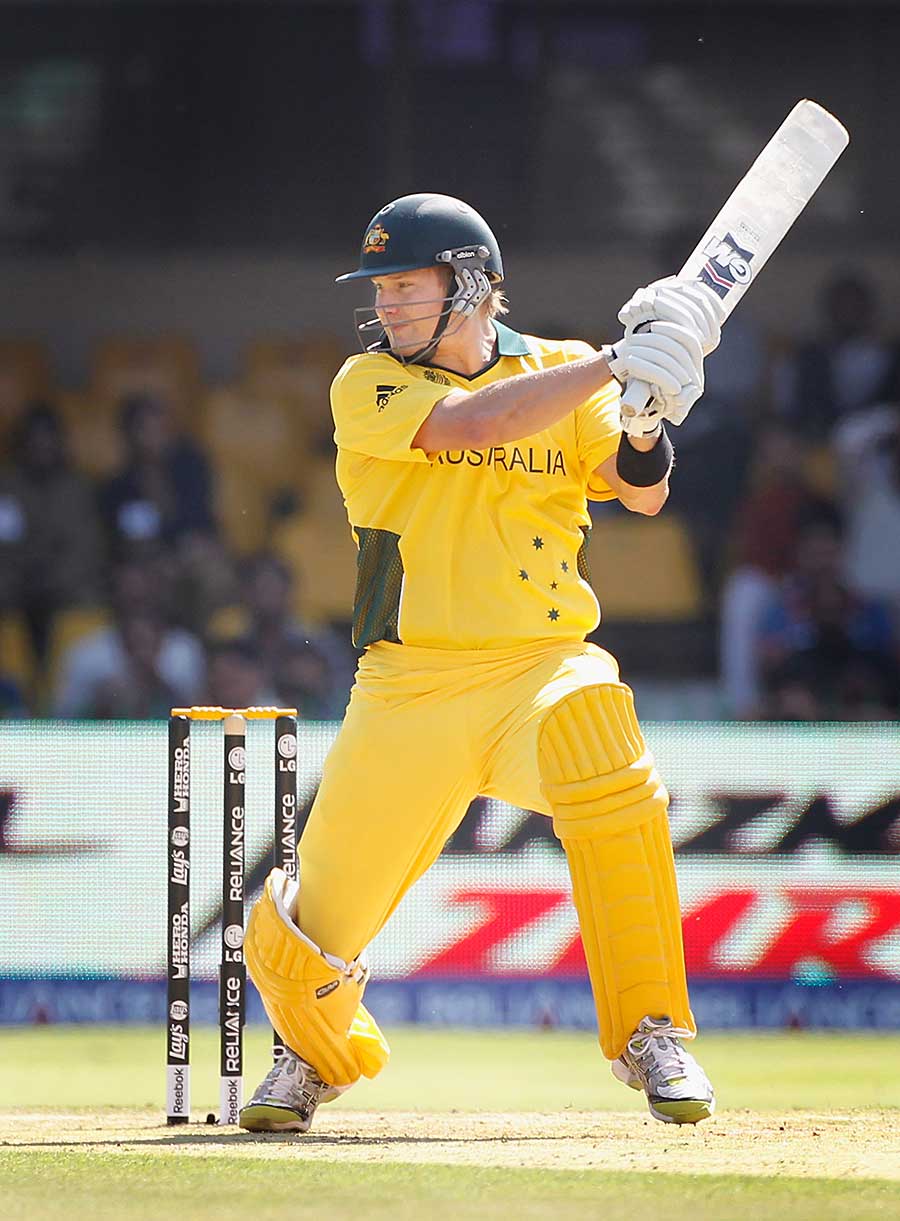
World Cup: Australia beat Zimbabwe by 91 runs

shane watson
(TOI)
AHMEDABAD:
Zimbabwe looked good to chase Australia's total when Charles Coventry drove Brett Lee handsomely through the covers for four in the second over and then sent one soaring over the point fence for a flat six in the fourth. But once Lee caught a skier to dismiss Coventry off his own bowling in the sixth over of the match and Shaun Tait sent Brendan Taylor's middle stump for a walk in the 11th, it was curtains for Zimbabwe.
Chasing Australia's hard-earned 262-6, Zimbabwe were bundled out for 171 in the 47th over as Ponting's men recorded an easy 91-run win in their World Cup opener at Motera here on Monday. And like all the three top teams in the first two days of the World Cup, Australia too showed that teams like Kenya, Canada, Zimbabwe and even Bangladesh would be better off playing in a league of their own and not in the premier tournament in ICC's cricket calendar.
It was a good warm-up for the defending champions before their crucial Group-A game against arch-rivals New Zealand in Nagpur on February 25. They still have some work to do as far as their batting against spinners is concerned but this might be the attack Australia would like to stick to after all their experimentation in the ODI series against England post Ashes. Lee and Tait opening the bowling with Mitchell Johnson coming first change followed by Shane Watson and Jason Krejza looks more than a formidable attack. With spin likely to play a crucial part as the tournament progresses, the Aussies will still have Michael Clarke and the young Steven Smith waiting in the wings.
But the same can't be said about their batting, especially against the spinners. Their weakness against spin is one thing other teams would like to exploit as Zimbabwe did here. Starting with Ray Price's left-arm orthodox spin from one end, the Zimbabwe slow bowlers shared 41 overs, restricting the mighty Aussies to a little over 250.
It was a David vs Goliath contest alright but Zimbabwe did everything right on the field to give the defending champions a wake-up call after Ponting elected to bat, ignoring the dew factor. One could understand Watson and Brad Haddin's cautious approach in their first match of the mega event, but slowly they found themselves caught in the Zimbabwean spin web from which breaking free became an uphill task.
That the Aussies managed to score just 32 runs losing one wicket in their batting powerplay—from the 41st over when spin was on from either end—showed the kind of stranglehold the Zimbabwe spinners had on the Aussie batsmen.
The hallmark of the spinning operation was the length as the Zimbabwe bowlers kept the ball up inviting the drive against the slight hint of spin. The Australians batsman's reluctance to play the sweep shot meant that playing straight in the V would be a dangerous proposition. Haddin and Watson both found that out—caught plumb in front playing straight and forward.
Interestingly, both these dismissals were referred after they were turned down by Ashoka de Silva and Richard Kettleborough respectively.
----------------------

score card


Australia innings (50 overs maximum) R M B 4s 6s SR
SR Watson lbw b Cremer 79 113 92 8 1 85.86
BJ Haddin† lbw b Utseya 29 68 66 3 0 43.93
RT Ponting* run out (Mpofu) 28 50 36 0 0 77.77

MJ Clarke not out 58 77 55 4 0 105.45
CL White b Mpofu 22 44 36 0 0 61.11
DJ Hussey b Price 14 15 8 1 1 175.00
SPD Smith c Chakabva b Mpofu 11 4 4 1 1 275.00

MG Johnson not out 7 5 3 1 0 233.33

Extras (lb 7, w 7) 14


Total (6 wickets; 50 overs; 191 mins) 262 (5.24 runs per over)
Did not bat SW Tait, JJ Krejza, B Lee
Fall of wickets1-61 (Haddin, 18.5 ov), 2-140 (Watson, 31.2 ov), 3-144 (Ponting, 32.5 ov), 4-207 (White, 44.6 ov), 5-241 (Hussey, 48.1 ov), 6-254 (Smith, 49.1 ov)


Bowling O M R W Econ

CB Mpofu 9 0 58 2 6.44 (2w)
RW Price 10 0 43 1 4.30 (1w)
P Utseya 10 2 43 1 4.30 (2w)
AG Cremer 10 0 41 1 4.10 (1w)

BRM Taylor 3 0 23 0 7.66


E Chigumbura 2 0 18 0 9.00 (1w)

SC Williams 6 0 29 0 4.83


Zimbabwe innings (target: 263 runs from 50 overs) R M B 4s 6s SR
BRM Taylor b Tait 16 53 24 1 0 66.66
CK Coventry c & b Lee 14 24 24 1 1 58.33
T Taibu† c Watson b Johnson 7 23 17 1 0 41.17
CR Ervine lbw b Johnson 0 13 6 0 0 0.00
E Chigumbura* c †Haddin b Krejza 14 44 25 2 0 56.00
SC Williams c Watson b Tait 28 40 40 1 1 70.00
RW Chakabva lbw b Krejza 6 21 18 0 0 33.33
P Utseya c Ponting b Hussey 24 52 45 1 0 53.33
AG Cremer c †Haddin b Johnson 37 51 51 4 0 72.54

RW Price not out 5 25 19 0 0 26.31
CB Mpofu c †Haddin b Johnson 2 12 11 0 0 18.18

Extras (b 4, lb 9, w 3, nb 2) 18


Total (all out; 46.2 overs; 190 mins) 171 (3.69 runs per over)
Fall of wickets1-22 (Coventry, 5.4 ov), 2-40 (Taibu, 10.3 ov), 3-40 (Taylor, 11.2 ov), 4-44 (Ervine, 12.3 ov), 5-88 (Chigumbura, 21.2 ov), 6-96 (Williams, 24.6 ov), 7-104 (Chakabva, 27.2 ov), 8-153 (Utseya, 39.2 ov), 9-167 (Cremer, 42.4 ov), 10-171 (Mpofu, 46.2 ov)


Bowling O M R W Econ

SW Tait 9 1 34 2 3.77 (1nb, 2w)
B Lee 8 1 34 1 4.25 (1nb, 1w)
MG Johnson 9.2 2 19 4 2.03

JJ Krejza 8 0 28 2 3.50


SR Watson 3 0 7 0 2.33


SPD Smith 5 0 24 0 4.80

DJ Hussey 4 1 12 1 3.00
-------------------------------------------------------------------

Paparazzi lie in wait for prince's bride-to-be

(TOI)
LONDON:
When Kate Middleton said "yes" to Prince William's marriage proposal, she was not just agreeing to become the wife of a future British king.
She was also signing up to massive media intrusion in her private life and years of intense attention from paparazzi photographers.
The question she and her future husband will now be pondering is whether that attention can be managed or if they will suffer from the same insatiable press frenzy that ultimately led to the death of William's mother, Princess Diana.
"There's huge interest. William has become the star of the royal family that his mother was and Kate's an attractive girl, so from a paparazzi point of view she potentially means a lot of money," said Max Clifford, Britain's best-known publicist.
"And these days the paparazzi are anyone -- anyone with a camera, anyone with a mobile phone," he told Reuters.
The couple's wedding on April 29 comes almost 14 years after Diana was killed with her lover Dodi al-Fayed when their limousine crashed into the wall of a Paris tunnel as they tried to escape from a posse of chasing paparazzi.
A British inquest in 2008 concluded the actions of the photographers were partly to blame for the fatal accident.
So far William and Kate, who began dating while at university in Scotland, have been largely spared the level of scrutiny that Diana suffered, partly through media restraint and because of more robust action from the royal family itself.

MOBBED
However, Middleton was mobbed by photographers on her way to work on her 25th birthday in 2007 and later that year formally complained to Britain's media watchdog, the Press Complaints Commission (PCC), after one newspaper published a picture of her which she said was taken as the result of harassment.
William has also complained that photographers on motorbikes had aggressively followed them after leaving a nightclub, while Queen Elizabeth has written to editors about paparazzi intruding on the royal family's privacy.
The crucial factor for the future will be the attitude of newspaper and magazine editors. If they do not use or pay for paparazzi pictures, there will clearly be less incentive for photographers to hound the royal couple.
"The judgment that editors will make will be 'can we justify showing this photo, breaking this news story, with our readers?'" Clifford said."Is it going to put them off or make more of them want to buy the paper or magazine? And that's the most important thing to all newspaper editors."
He predicted the couple's easy ride would continue initially, because upsetting the popular newlyweds is likely to upset their readers too.
"As time goes by, if opportunities come along then of course the media will exploit her because it sells papers," he said. "They will be looking to see if there's an angle there that obviously the more sensational, the more people will want to read it."
OUT OF TOUCH
Following Diana's death, the public turned against both the media and the royal family, regarding the latter as an aloof and out of touch institution which left Diana to suffer at the hands of a remorseless press.
Now, royal aides have developed a more intuitive, thoughtful, sensible, and workmanlike approach, experts say "What they've done is develop a kind of stick and carrot approach to the world media and in particular to the paparazzi, and they have warned the paparazzi off quite severely," royal biographer Christopher Wilson told Reuters. "They have sensed certainly within the British media there's still this residual feeling of guilt about Diana and the way she was treated which means (the press) has very much more been prepared not to intrude too much and give them their space."
Bob Satchwell, Executive Director of Britain's Guild of Editors, said aides now accepted the public had an interest in and a right to know more than had been thought in the past.
A new code of practice brought in by the PCC in the wake of Diana's death which stated people were entitled to privacy was also taken very seriously, he added. Editors would now think hard before using the sort of pictures printed 20 years ago.
"That (the code) made a significant difference to the way papers looked at not just royal princesses or royal princes, it made a huge difference and took away most of the market for paparazzi in this country," he told Reuters.
"I think editors will think more than twice before they publish pictures which might be considered intrusive."
Middleton herself, at 29, is viewed as much older and wiser than Diana who emerged from obscurity as a 19-year-old to become Prince Charles's bride and front page news.
Having dated William for so long, Kate has been groomed for her future role, and the media spotlight will not be such a shock. She is expected to get far more advice and be under greater control, with her exposure kept to a minimum unless on official duties.
"Kate comes from a much more stable background -- she is already eight years older than Diana was when she got married and is, in every sense, more mature, well-grounded and comfortable in her own skin," said Claudia Joseph, author of "Kate: The Making of a Princess".
"You have to remember that she has been dating the prince since they were at university so has had some practice for the role. Kate may well be as glamorous as Diana but they are very different people and come from totally different backgrounds."

Clifford said Kate is never going to have the kind of freedom that Diana found that she had in some ways.
"Obviously Diana exploited that freedom to become the most photographed woman in the world and Kate won't have that opportunity," Clifford said. "The palace and all those around will have learned from what happened with Diana and they will be very, very guarded to make sure that doesn't happen again."

However, it is not just the notoriously aggressive British media that the couple will have to cope with.
"If you think the UK media is obsessed with celebrity you should look at European media and American media who go even wilder," said Satchwell.
"And they don't get the same feedback that the UK media gets about the activities of the paparazzi involving the royals."
Most predict that once the wedding is over, the paparazzi will resume normal service.
"I don't think they'll ever change. Everybody is competitive with everyone else and they want to get a better story and they're prepared to go further than the competition," Wilson said.
He said Middleton has been shrouded in secrecy for the last seven years with occasional opportunities for photographs, but when she becomes a public figure after her marriage to William on April 29 the light-handed approach may end."I think that a lot of self-restraint that has been exercised so far will probably start to drip away."
Gadhafi's son warns of civil war in Libya

(TOI)
CAIRO :
The son of longtime leader Moammar Gadhafi warned in a nationally televised address that continued anti-government protests that have wracked Libya for six days might lead to a civil war that could send the country's oil wells up in flames.
Appearing on Libyan state television after midnight Sunday, Seif al-Islam Gadhafi said the army still backed his father, who was leading the fight, although he added that some military bases, tanks and weapons had been seized.
``We are not Tunisia and Egypt,'' the younger Gadhafi said, referring to the successful uprisings that toppled longtime regimes in Libya's neighbors.
He acknowledged that the army made mistakes during protests because it was not trained to deal with demonstrators but added that the number of dead had been exaggerated, giving a death toll of 84. Human Rights Watch put the number at 174 through on Saturday, and doctors in the eastern city of Benghazi said more than 200 have died since the protests began.
The younger Gadhafi offered to put forward reforms within days that he described as a "historic national initiative'' and said the regime was willing to remove some restrictions and begin discussions for a constitution. He offered to change a number of laws, including those covering the media and the penal code.

With HC order, Kasab one step closer to gallows

(TOI)
MUMBAI: "Apko di hui saza-e-maut barkarar rakkhi jaati hai (We have upheld your death sentence)." With these words the Bombay high court confirmed on Monday the death sentence awarded last May to gunman Ajmal Amir Kasab for his "diabolical" role in the 26/11 terror attacks.
Kasab's moods in court have fluctuated. On Monday, an unkempt Kasab was seen grinning through most of the hearing, during which the judges took 15 minutes to read the highlights of a 1,208-page judgment.
The court held Kasab, 23, individually responsible for seven murders and together with his accomplice Abu Ismail, responsible for 66 other killings on the night of November 26, 2008 when they went on the rampage from CST to Cama Hospital and Metro Junction to Chowpatty. He was also held guilty for abetting and conspiracy in the murders of the remaining 166 victims who died at the Taj, Oberoi and Trident and Nariman House.
However, in a continued setback to the state government, the bench of Justices Ranjana Desai and Ranjit More upheld the acquittal of co-accused Indians Faheem Ansari and Sabauddin Shaikh. The court said there was no conclusive corroborative evidence. The duo had been charged with facilitating the attack by furnishing a hand-drawn map of prominent targets in Mumbai to the gunmen at the behest of Lashkar-e-Toiba.
In an interesting development, the division bench differed with the trial court by accepting the police case that Malabar Hill was indeed the final destination of the terrorists. "(The confession statement) will show that these terrorists were proceeding via Chowpatty towards Malabar Hill, which was their final target," said the judges. Last year, the trial court had ruled out the possibility that Kasab and Ismail were proceeding to the upmarket Malabar Hill, where many VIPs stay, when Kasab was nabbed and Ismail was gunned down at Chowpatty.
Kasab was seen on the video-conference screen smiling in his prison cell. But he may have little to worry for a while. It could take years for a death sentence to be executed, even if Kasab moves the supreme court and it upholds the verdict. He can then file a mercy plea with the President.
Kasab, dressed in white prison attire and sporting a thin beard, looked slightly dishevelled but listened intently from the confines of his special high-security Arthur Road cell. However, he showed no anguish or remorse, but grinned and smiled when the verdict came.
Giving Ansari and Shaikh the "benefit of doubt", the HC ensured that it was a mixed bag for the state. "I have advised the chief minister to challenge the acquittals in the supreme court,'' special public prosecutor Ujjwal Nikam later said. He added he was elated with the death confirmation.
Calling Kasab`s crime the "rarest of rare``, the judges said they had no hesitation in awarding him the death penalty for the "brutal, grotesque and diabolical" murders. "Kasab is a threat to society," said the judges, adding, "Kasab waged a war against the government of India pursuant to a conspiracy which was hatched in Pakistan. The object was to destabilize (the country) and to weaken India`s economic might.... There is hardly any scope for a person like Kasab to be rehabilitated or reformed." The 26/11 attacks had caused damages to the tune of over Rs 150 crore, noted the court.
Kasab`s rampage at CST and Cama, which accounted for a majority of deaths—around 68—weighed heavy with the high court. "The brutality, perversity and cruelty exhibited by Kasab while committing multiple murders of innocent men, women, children, aged persons and policemen without provocation for a motive which has no moral justification makes this case a gravest case of extreme culpability," said the judges.
The court signalled a zero tolerance for terrorism and looked to send a strong message to deter any future terrorists. "The harsh penalty of death is necessary to warn those who may want to take a similar path. Strong arm of law must deal with Kasab firmly otherwise a wrong signal will be sent that the courts are ineffective in dealing with crimes as serious as this. Soft handling of a crime like this will erode the public confidence in the efficacy of law," the high court said.
Defence lawyers Amin Solkar and Farhana Shah had urged for leniency pointing out that Kasab was barely out of his teens, not sane, emotionally disturbed and a mere tool in the hands of the LeT. The high court refused to accept this, referring to his confessional statement where he expressed displeasure that more people could have been killed at CST if the killers arrived earlier. The judges noted that they had observed his demeanour during the hearing and Kasab had never shown any repentance or remorse. "He has never shown any repentance, but has loudly proclaimed that he wants to create more fidayeen by setting an example," said the judges.
The police theory that foreigners were targeted with an intention to "overawe" the country and harm its relations with other nations received a major fillip. The high court said the intercepted conversations of the terrorists holed up in the Taj and Nariman House "reflected anti-Jewish and anti-Israel sentiments. The terrorists attacked hotels where foreigners, India`s esteemed guests, stay because that would have adverse effects on India`s relations with foreign countries". The court further said that the attack on the crowded CST station, which was under the Union government, was a direct challenge to the Centre`s authority.
The court relied on Kasab`s own confession and the testimony of other witnesses to agree with the prosecution that Malabar Hill was the final destination of the two terrorists. "Deceased Abu Ismail told Kasab that he would tell him after he reaches Malabar Hill (about their target). This part of the confessional statement of Kasab fits in with the prosecution case deposed to by the witnesses. It is corroborated by them." Special judge M L Tahilyani had last year rapped the Mumbai police for its investigation into this aspect. The judge had then said that Kasab and Ismail were not planning to leave CST and had done so only after meeting with stiff resistance from the police. "Both terrorists were never destined to go to Chowpatty. By mistake they went there," the judge had observed.
On Monday, the high court upheld the 86 charges against Kasab, including 31 he is specifically charged with. He was sentenced to death on five counts -- waging war against India, murder, conspiracy to murder, common intention to commit murder and participating in an act of terror (the last under the Unlawful Activity Prevention Act).
Kasab was held guilty for individually murdering the Kuber`s navigator Amarchand Solanki, constables Ambadas Pawar and Tukaram Ombale, and CST commuters Sitaram Sakhare, Rahamutall Ibrahim, Vinod Gupta and Abbas Ansari. Along with Ismail, he killed 66 people, including ATS chief Hemant Karkare, and senior cops Ashok Kamte and Vijay Salaskar.
The court also convicted Kasab of robbery, dacoity, kidnapping, voluntarily causing hurt, grievously hurting a public servant, wrongful confinement and causing mischief with explosives (all Indian Penal Code); carrying unlicensed weapons and acquiring and using prohibited guns (Arms Act); possessing and using explosives, planting IED bombs at CST, lobbing hand grenades and causing explosions (Explosives Act); causing explosions to endanger life and property (Explosive Substances Act); damaging and destroying railway property and endangering passenger safety (Railways Act); entering the country without a passport and entering India illegally (Passports Act); and smuggling into India prohibited arms, pistols and ammunitions (Customs Act).